
Why do many consulting firms struggle to get their message across?
Why is their value lost in translation?
Here’s one reason.
Many executives confuse messaging with copywriting.
But messaging isn’t just about beautiful words.
It’s about making decisions.
It’s about clarity.
Most consulting firms skip straight to copy and content, without building the structure beneath it.
Hence their message becomes a soup of random ideas that disappear in the noise.
For your messaging to be effective, it has to comply with these 7 rules:
1. There is no effective messaging without clear positioning
You know this.
Positioning is choosing a frame for your brand by finding the right problem to solve, the right clients to solve it for, and how you’ll solve it differently.
Messaging is what you’ll say to bring that frame to the market.
That’s why it’s impossible for your messaging to deliver results when the positioning is unclear.
Because there is no direction for the message.
How can you define what you’ll say if you don’t know who you’ll target and how you are different?
So effective messaging is always born from positioning.

2. The more you try to tell, the less effective it gets
You could say many things about your services.
All the painful problems you solve.
All the amazing capabilities you have.
And all the great benefits you deliver.
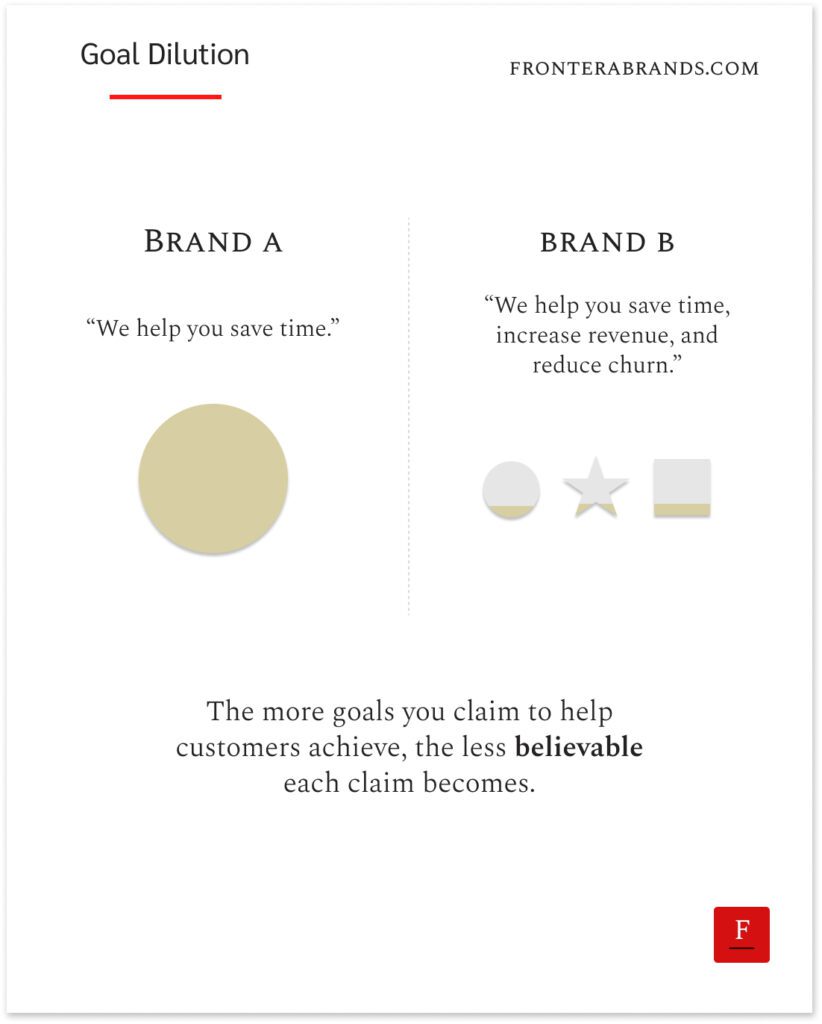
But the more you try to tell, the less effective your messaging gets.
The market is already noisy and cluttered.
Buyers are bombarded with messages from thousands of companies.
So when you try to deliver too many messages, they get lost in the noise.
It becomes impossible for buyers to associate you with specific ideas.
Because you tell too many of them.
That’s why effective messaging prioritizes.
Certain problems to talk about.
Certain ways to explain your difference.
And certain points to convey about your ideology.
Only then does your messaging become like a sharp knife.
And it can cut through people’s mental fog in today’s noisy world.
3. Messages require repetition to get through
The previous point is about sending fewer messages to the market.
This one is about repeating them again and again.
The reason is the same.
Tell it once or twice, and they forget.
It’s not enough for buyers to associate those ideas with your brand.
There is a common marketing knowledge based on a study done back in the 1930s.
“Customers need to see a brand’s message 7 times before a purchase.”
Well, thanks to all the clutter, things are worse these days.
Buyers need to see your messages at least 30 times before buying.
Especially for high-value consulting services.
That’s why effective messaging repeats the same messages in different ways.
Because buyers need to see it dozens of times.
Here’s a concrete example.
One of Frontera’s brand messages is:
“Weak messaging causes your marketing channels to be ineffective.”
And we repeat this message in different ways through content to get it across:

4. Problems resonate quicker than solutions
Human beings are selfish by nature.
Whenever they interact with a new brand, they’d like to know what’s in it for them.
They care about how everything can fit into their lives.
And that’s why messaging about their problems resonates quicker than messaging about your solutions.
That’s why effective messaging leads with buyers’ problems.
Your solution to those problems comes later.
If you directly lead with a solution, you make them think: “But how does all this fit into my life?”
And that question is enough to lose a potential client.
So effective messaging agitates buyers’ problems in top-of-the-funnel messages to resonate quicker.
And it introduces solutions gradually as they progress in their buying journey.
5. An enemy is a shortcut to convey a message
You’ve probably heard of this saying in some superhero movies:
“Your enemies define you.”
This works for messaging too.
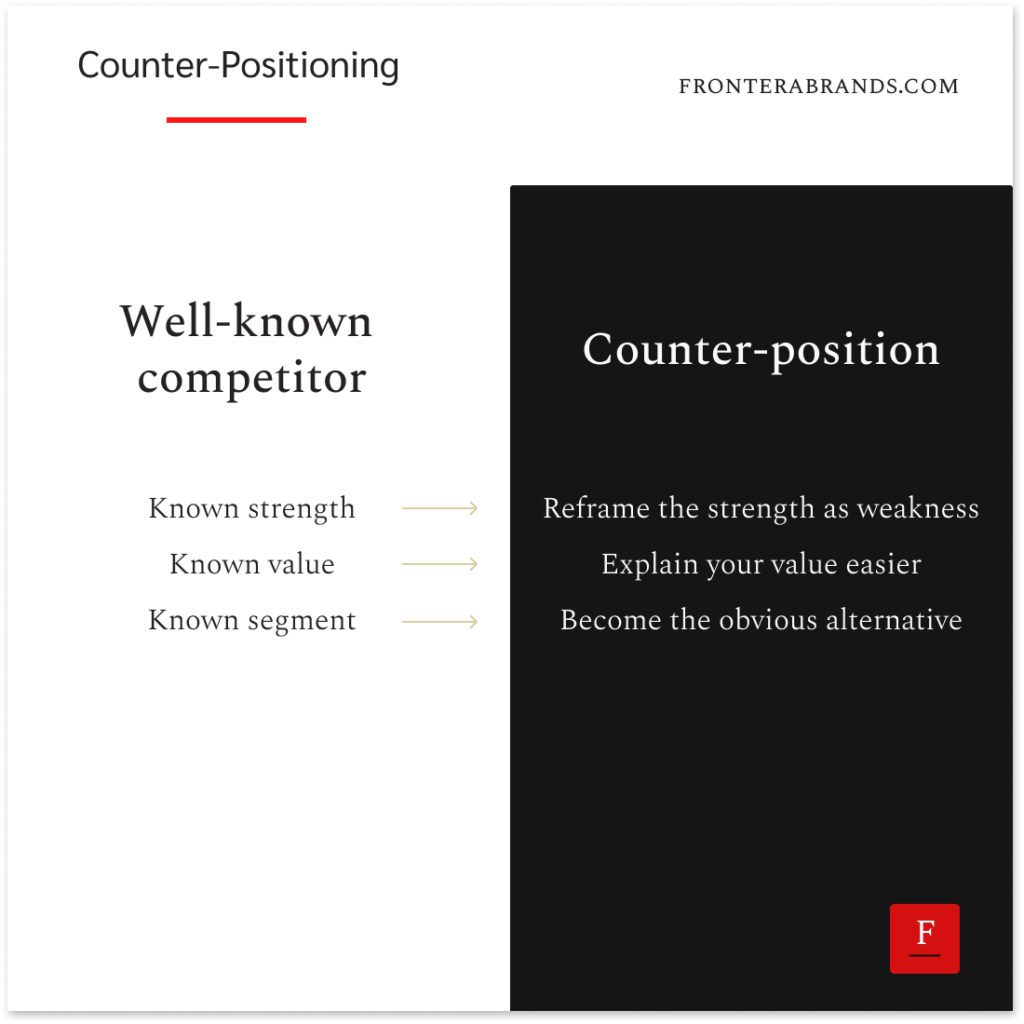
Because when you have a villain to fight, it’s easier for people to understand your message.
It draws clear lines:
“This is our enemy, and we stand against what they stand for.”
That’s why it’s useful to choose a well-known enemy.
We talked about Avis’s counter-positioning against market leader Hertz and T-Mobile’s Un-carrier move.
7UP called itself “The Uncola” to counter-position against Coca-Cola.
But the enemy doesn’t even need to be a single competitor.
It can be customers’ existing way of doing things (e.g., Slack vs email).
Or a problem in your industry (e.g, Big Four using 23-year-old consultants to advise C-suites).
So effective messaging chooses an enemy that represents clients’ problems.
It builds a narrative around it.
It uses the negative to explain the positive.
6. Effective messaging follows the clients’ language
This is something I hear from some of our clients when they come to us.
They use certain words to describe what they offer, their difference, and market category.
But those words confuse their buyers.
From the buyers’ perspective, what that business offers is something else.
Hence, they describe everything with different words.
So every sales call requires a lot of explanations to get over this barrier.
Buyers need an “aha” moment to understand what everything is about.
But this creates a big problem.
Because sometimes that “aha” moment never happens on sales calls.
Plus, many confused buyers drop out before, as the brand’s website and content use a foreign language for them.
That’s why effective messaging doesn’t fight with buyers.
It aligns with their world.
It uses the words they use to remove every little objection.
7. Ideology makes it memorable
One thing is to make your messaging clear.
The other thing is to make it sticky.
So clients not only understand the message, but they also believe in it, remember it, and share it.
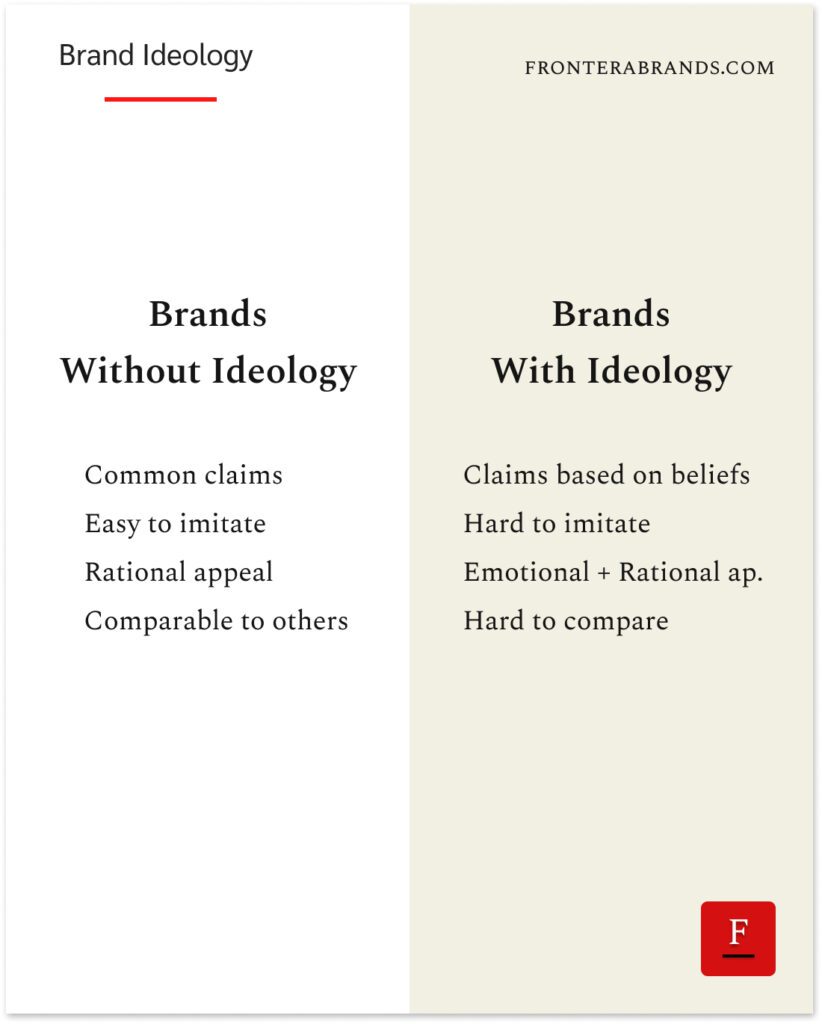
That’s only possible if you have a strong brand ideology.
Because an ideology allows you to resonate with buyers on an emotional level.
You give them something beyond a product or service.
Something that can become part of their identity.
So effective messaging gives meaning to offers through a clear point of view.
–
You put all that work into your products and services.
You have expertise.
And your business creates a lot of value for your clients.
Great.
But after doing all that, don’t lose the battle at the last mile by ignoring how to communicate that value.
Because your messaging creates their perception.
And that perception shapes their buying decisions.
So go through this list.
Spot the rules you’re ignoring and fix them.
Remember.
For potential clients, your value is as good as you communicate it.
–
Enjoyed this article?
Then you’ll love the How Consultancies Win Newsletter.
Get the “7 Positioning Sins That Cost Consultancy Firms Millions” guide when you join. It’s free.
