
Every boutique consulting firm wants to be seen as an authority. But most skip a stage that makes authority possible.
That stage is choosing what to be known for.
Think about it.
Most consulting firms start by saying yes to every type of client and project.
Because at the beginning, it’s about survival.
But what keeps you alive at that early stage is the same thing that keeps you stuck later.
You survive, but you hit a ceiling you can’t explain.
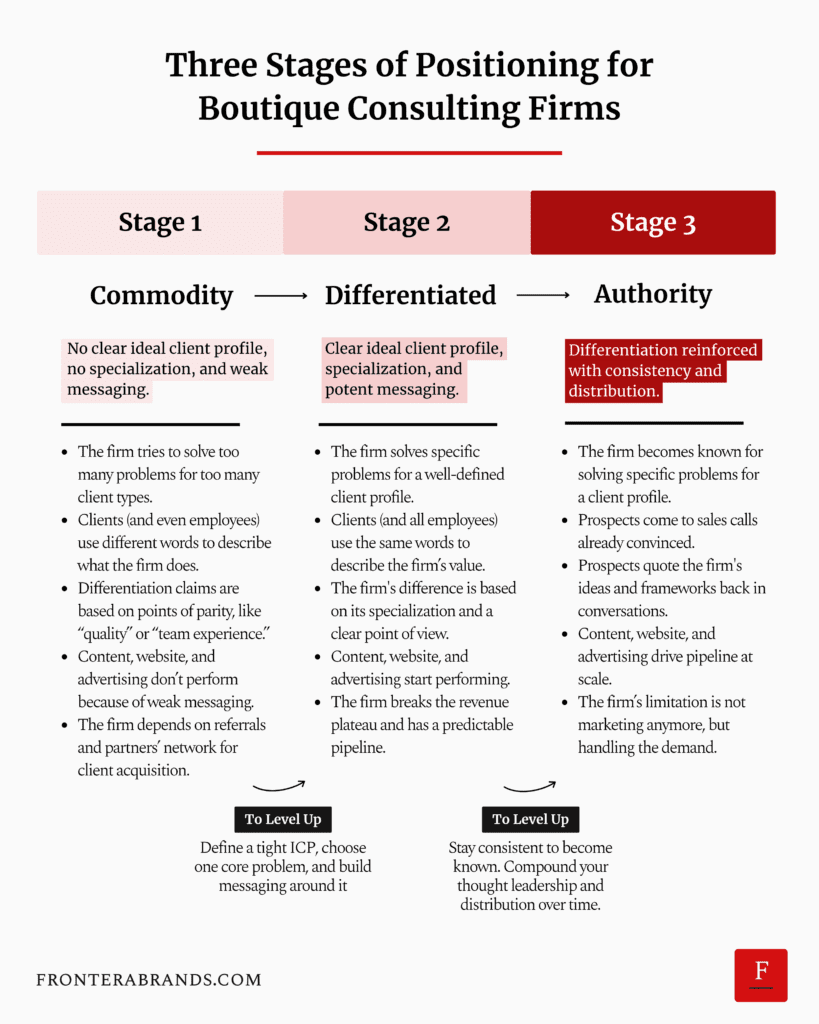
Clients and even employees use different words to describe what the firm does.
Content and marketing channels underperform because you try to talk to too many client types about too many problems.
Buyers push back on price because they don’t see your firm as the specialist.
That’s the Commodity stage.
Most firms stay here for years.
They try to jump to the Authority stage with more content and visibility.
But it never works.
Because first, they have to go through the Differentiated stage.
Instead of adding, they have to cut out things:
- Certain client profiles
- Certain problems they solve (hence services)
- Certain messages they convey
This cutting-out process feels risky.
Because it means letting go of the “just in case” clients and projects.
But only then does the firm open the path to becoming an authority.
The firm’s difference becomes based on a real specialization.
Prospects get to see the firm’s value on every marketing channel.
The firm overcomes the revenue plateau.
And when you stay consistent with that over time, you reach the Authority stage.
So if your firm has been stuck for some time, the answer probably isn’t more of doing the same.
It’s deciding what to be known for first.
And having the discipline to stick with it.
—
Enjoyed this article?
Then you’ll love the How Consultancies Win Newsletter.
Get the “7 Positioning Sins That Cost Consultancy Firms Millions” guide when you join. It’s free.
